EN
EN


Mula sa Backup hanggang sa Power Plant: Paano Binabago ng Demand Response ang mga Cycle ng Pagpapatakbo ng Generator
Time : 2026-07-13
Ang mga generator na pang-reserba ay orihinal na idinisenyo para sa isang napakasimpleng layunin: magsimula lamang kapag nabigo ang grid, tumakbo habang may kaguluhan, at huminto kapag bumalik ang kuryente mula sa utility. Sa tradisyonal na modelo na ito, ang mga genset ay gumagana bilang mga asset na pang-emergency lamang, na may kaunting oras ng operasyon bawat taon at mahabang panahon ng pag-iistay sa idle.
Gayunman, ang paradigma na ito ay mabilis na nagbabago. Dahil sa presyon sa grid, integrasyon ng enerhiyang mula sa renewable sources, at dumaraming kailangan ng flexible capacity, ang mga programa sa demand response (DR) ay ginagawang aktibong resource ng grid ang mga generator na pang-reserba. Bilang resulta, ang mga generator set ay hindi na lamang patakaran sa insurance—naging mga dispatchable power asset na sila na maaaring tawagin kapag may mataas na demand.
Ang transisyon na ito ay lubos na binabago ang paraan ng pagpapatakbo ng mga generator, lalo na ang kanilang duty cycles, mga kinakailangan sa pagpapanatili, at mga inaasahang disenyo.
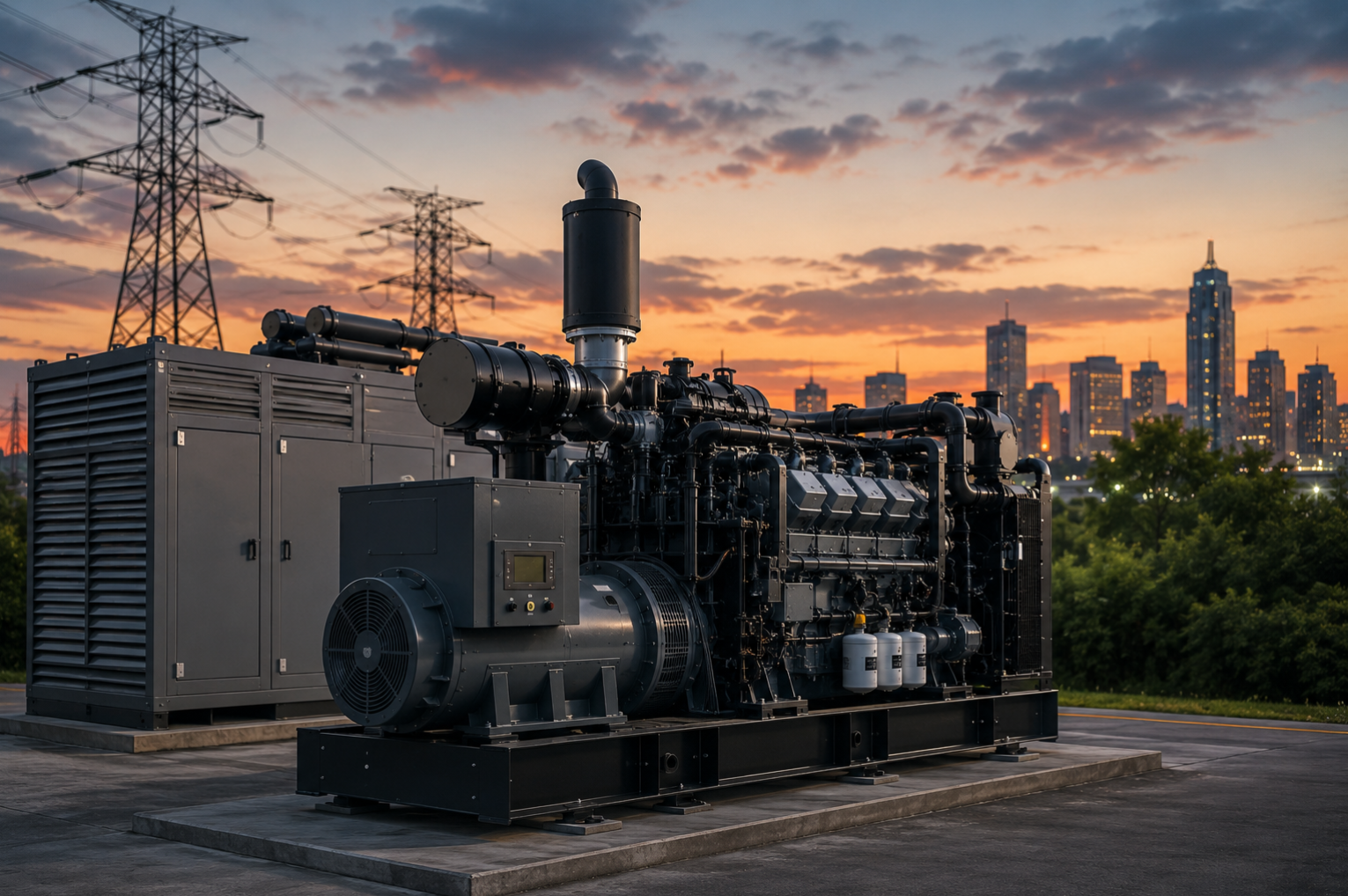
alt:Industrial generator set sa rooftop platform
Mula sa emergency standby hanggang sa grid resource
Ang demand response ay tumutukoy sa mga mekanismo kung saan ang mga konsyumer ng kuryente ay nag-aadjust ng kanilang pagkonsumo o suplay bilang tugon sa mga signal mula sa grid tulad ng mga patakaran sa presyo, mga kondisyon ng peak load, o mga pangyayari na may kaugnayan sa pagkamapanatili ng sistema. Sa mga advanced na merkado, ang mga distributed energy assets—kabilang ang mga backup generator—ay maaaring i-aggregate at i-dispatch nang parang isang power plant.
Sa ilalim ng framework na ito, ang mga generator ay maaaring i-activate hindi lamang sa panahon ng outage kundi pati na rin sa:
· Mga panahon ng peak demand (peak shaving)
· Mga pangyayari ng grid congestion
· Mga kondisyon ng capacity shortfall
· Mga signal para sa ancillary service dispatch
Ito ay isang mahalagang pagbabago: ang mga generator ay hindi na pasibong backup system kundi mga flexible at dispatchable capacity resources.
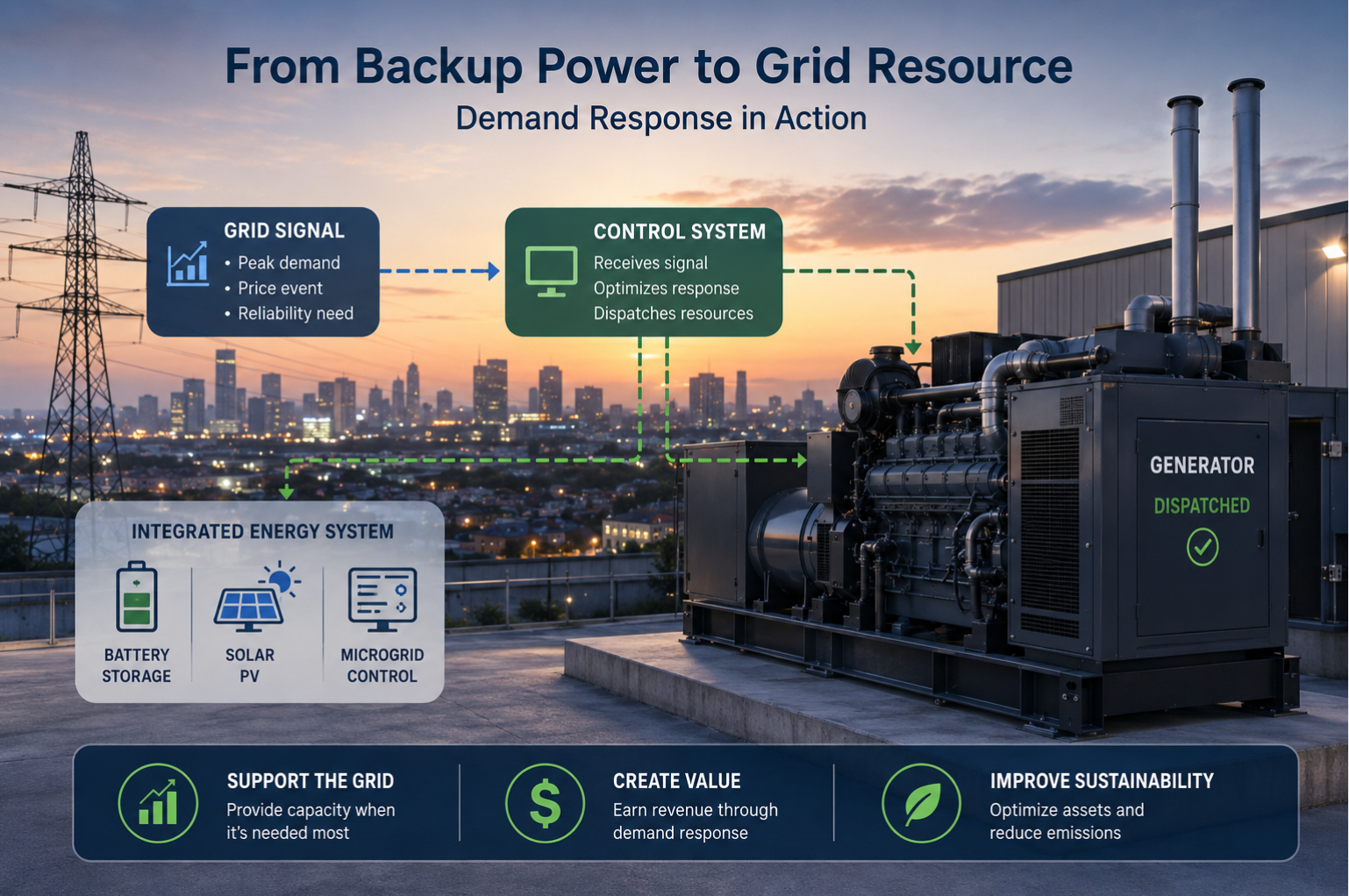
alt:Infographic ng demand response na nagpapakita ng daloy ng generator dispatch, na may integrated battery storage, solar, at microgrid control
Paano nagbabago ang duty cycles sa pangkalahatan
Ang pinakamahalagang teknikal na epekto ng demand response ay ang pagbabago ng generator duty cycles.
Sa tradisyonal na modelo, ang mga duty cycle ay binary at mahuhulaan: mahabang panahon ng pagkakatigil na sinusundan ng bihira, buong karga sa mga pangyayaring pang-emerhensiya. Ngayon, ang paglahok sa Demand Response (DR) ay nagdudulot ng madalas na pag-start at pag-stop, pati na rin ng mas variable na kondisyon ng karga.
Imbis na “off → emergency full load → off,” ang mga modernong generator set ay nakakaranas ng:
· Mas madalas na pag-start at pag-shutdown
· Operasyon sa bahagyang karga sa mahabang panahon
· Mabilis na transisyon sa pagitan ng mga estado ng karga
Ang pagbabagong ito ay nagpapataas ng mekanikal at thermal na stress sa sistema. Ang mga komponente tulad ng turbocharger, exhaust manifold, at cylinder head ay napapahantad sa paulit-ulit na mga siklo ng thermal expansion at contraction, na nagpapabilis ng fatigue sa paglipas ng panahon. Gayundin, ang madalas na cold start ay nagpapataas ng wear sa lubrication at nababawasan ang haba ng buhay ng engine sa long-term kung hindi ito wastong pinamamahalaan.
Mga implikasyon sa operasyon, regulasyon, at kapaligiran
Ang pagbabago ng duty cycle ay may mas malawak na implikasyon din sa labas ng mekanikal na pagsusuot. Ang mga balangkas para sa pagsunod sa kapaligiran, tulad ng mga nasasakop ng U.S. Environmental Protection Agency, ay orihinal na idinisenyo batay sa palagay na ang mga backup generator ay gumagana lamang minsan-minsan.
Ang demand response ay nagpapabagu-bago ng hangganan sa pagitan ng emergency use at komersyal na operasyon. Habang tumataas ang runtime, kailangan ng mga operator na mabisado na tiyaking:
· Hindi lumalabag sa mga patakaran para sa emergency classification
· Sinusunod ang mga threshold para sa taunang bilang ng operating hour
· Na- track nang tama ang mga emissions sa lahat ng operating mode
Kasabay nito, ang pag-uugali ng emissions ay naging mas kumplikado rin, dahil ang mga generator ay ngayon ay gumagana sa mas malawak na hanay ng load conditions. Ang mga part-load inefficiencies at transient operation ay maaaring dagdagan ang emissions intensity bawat kWh kung hindi ito pinakamainam.
System integration at ang pag-usbong ng hybrid architectures
Sa mga modernong sistema ng kuryente, ang mga generator na pang-reserba ay mas lalong isinasama sa mas malawak na arkitekturang pang-distributed energy. Sa halip na gumagana nang mag-isa, sila ay pinagkoordinahan kasama ang:
· Mga sistema ng imbakan ng enerhiya gamit ang baterya (BESS)
· Lokal na paggawa ng enerhiya mula sa mga renewable na mapagkukunan
· Mga sistema ng kontrol para sa microgrid
Ang ganitong integrasyon ay nagpapahintulot ng mas sopistikadong mga estratehiya sa operasyon, tulad ng pagpapaganda ng mga pagbabago sa demand o pagbibigay ng pansamantalang suporta sa grid. Sa ilang kaso, ang mga pinagsamang generator na pang-reserba ay pinamamahalaan pa nga bilang mga virtual power plant (VPP), kung saan sila ay nakikilahok sa mga merkado ng enerhiya bilang isang iisa at pinagkaisang yunit.
Lalo na para sa mga data center, ang ganitong pagbabago ay napakahalaga. Ang mga pasilidad na dati ay umaasa lamang sa mga generator para sa emergency backup ay ngayon ay sumusuri sa posibilidad ng kontroladong pakikilahok sa mga serbisyo ng grid, lalo na noong panahon ng mataas na presyo ng kuryente o kapag ang grid ay limitado ang kakayahan.
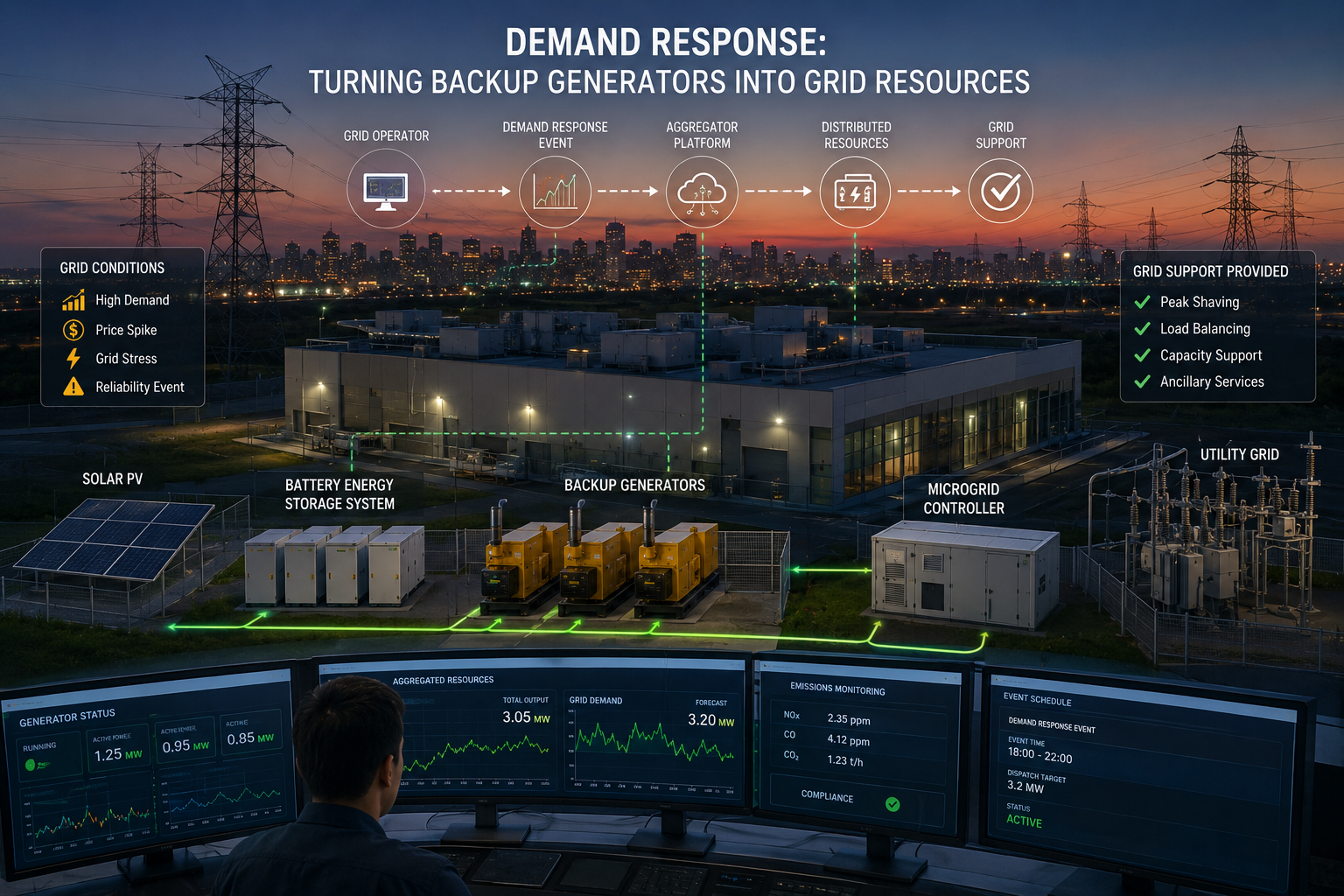
alt:Infographic tungkol sa demand response para sa mga generator na pang-reserba
Pag-unlad sa engineering ng mga modernong generator set
Upang suportahan ang bagong katotohanan ng operasyon na ito, binabago ng mga tagagawa ng generator ang kanilang mga prayoridad sa disenyo. Ang mga modernong sistema ay lumalakas ang pagtuon sa mga sumusunod:
· Mas mabilis na sagot sa transitoryo at pagtanggap ng karga
· Pinabuting thermal durability para sa madalas na cycling
· Mga konpigurasyon na dalawang-kuryente o flexible sa kuryente
· Mga advanced na system ng monitoring at predictive maintenance
Kasabay nito, ang mga digital na kontrol at telemetry ay naging karaniwan na, na nagpapahintulot sa real-time na monitoring ng mga emissions, load profiles, at compliance sa runtime. Ito ay mahalaga para sa mga operator na nakikibahagi sa mga demand response program kung saan ang mga signal para sa dispatch ay maaaring madalas at sensitibo sa oras.
Konklusyon
Ang demand response ay lubos na nagbabago sa papel ng mga backup generator sa mga modernong power system. Ang dating isang device lamang para sa emergency ay unti-unting umuunlad bilang isang flexible at dispatchable na energy resource na nakapaloob sa mga kada-umang dynamic na electricity market.
Ang pagbabagong ito ay nagbabago ng higit pa sa mga pattern ng paggamit—binabago nito ang mga cycle ng operasyon ng generator, ang mga priyoridad sa disenyo ng inhinyero, ang mga estratehiya sa pagsunod sa regulasyon, at ang arkitektura ng sistema. Sa pangkalahatan, ang mga generator na pang-emergency ay gumagalaw sa isang spectrum:
mula sa mga hiwalay na asset na pang-emergency → patungo sa mga integrated na
power node na sumasagot sa grid.
Habang tumutuloy ang trend na ito, ang hangganan sa pagitan ng backup power at power generation ay magiging mas malabo, na nagpapahiwatig ng isang istruktural na pagbabago sa paraan ng disenyo at operasyon ng mga distributed energy system.
Dahil ang mga duty cycle ay nagbabago, dapat ding magbago ang kagamitan na nasa likod nila. Makipag-usap sa engineering team ng Asia Generator tungkol sa mga genset na idinisenyo para sa madalas na cycling, mabilis na pagtanggap ng load, at pangmatagalang reliability sa mga application ng demand response.