EN


Your Generator Passes the Factory Test. But Will It Survive on Site?
Why real-world operating conditions matter as much as factory performance
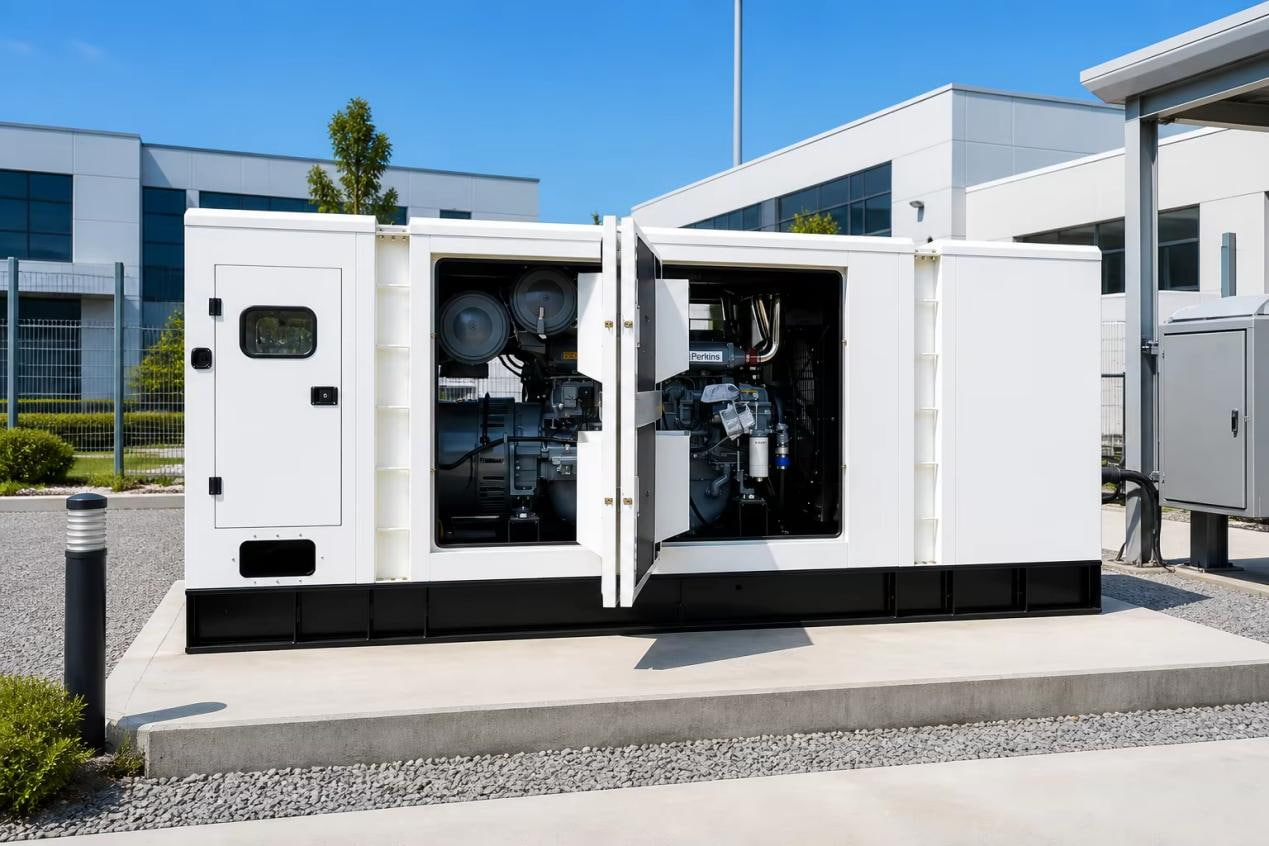
A generator set can pass its factory inspection and still encounter problems after installation. This does not necessarily mean the equipment was manufactured incorrectly. In many cases, the difference lies between the conditions under which the generator was tested and the conditions in which it must operate.
For industrial facilities, data centers, construction sites, hospitals, and remote power projects, reliable power depends on more than the generator's rated output. The engine, alternator, cooling system, ventilation, fuel supply, electrical protection, and installation environment must all work together.
Understanding this relationship is the first step toward selecting a generator that performs reliably throughout its service life.
1. Factory Testing Is Essential, but It Is Not the Whole Story
Factory testing verifies that a generator set operates according to specified requirements under defined test conditions. Depending on the contract and testing scope, inspections may include starting performance, operating parameters, voltage and frequency regulation, alarms, protective functions, and operation under load.
A load bank test is particularly useful because it allows the generator to supply a controlled electrical load before delivery. Engineers can observe engine behavior, alternator output, temperatures, and other operating parameters.
However, a factory test cannot automatically reproduce every condition at the final installation site. Ambient temperature, altitude, ventilation resistance, fuel quality, exhaust-system design, and the characteristics of the connected equipment may differ significantly.
A successful factory test therefore provides important evidence of equipment performance, but it does not replace proper site design, installation, and commissioning.
2. High Ambient Temperature Can Reduce Available Power
Temperature is one of the most important environmental factors affecting generator performance.
An internal combustion engine requires sufficient air for combustion and an effective cooling system to remove heat. As ambient temperature rises, the cooling system has a smaller temperature difference available for rejecting heat. Higher intake-air temperatures can also reduce air density and affect engine performance.
The alternator and associated electrical equipment must also remain within their specified thermal limits.
For projects in the Middle East, Africa, and other hot regions, engineers should not select a generator based solely on its nominal rating. They should confirm the available output at the actual design ambient temperature.
Cooling-system selection is equally important. Radiator capacity, airflow, enclosure ventilation, and the temperature of the air entering the radiator all influence performance. A powerful radiator cannot compensate for an installation that restricts airflow or repeatedly recirculates hot exhaust air.
The correct approach is to verify the complete generator package against the specified site conditions and the manufacturer's performance data.
3. High Altitude Changes the Operating Requirements
At higher elevations, atmospheric pressure and air density decrease. This can reduce the amount of oxygen available for combustion and affect the engine's power output.
The alternator and cooling system may also require attention, depending on their design and operating conditions.
The amount of derating is not universal. It varies with the engine model, turbocharging system, alternator design, ambient temperature, and the manufacturer's published limits.
For this reason, a generator intended for a high-altitude mine, remote industrial facility, or mountainous construction site should be evaluated using the actual site elevation and temperature rather than a general percentage copied from another project.
The objective is to confirm that the equipment can deliver the required electrical power under the specified conditions, not simply to purchase a larger unit without engineering verification.
4. Dust, Ventilation, and Enclosure Design Matter
In desert and dusty environments, airborne particles can accumulate on air filters, radiator fins, and other surfaces. Restricted airflow can increase operating temperatures and create additional maintenance requirements.
An acoustic enclosure must therefore do more than reduce noise. Its air intake, exhaust discharge, internal airflow path, access doors, and service openings must be designed for the intended environment.
Dust-resistant features should be selected according to the severity of exposure and the required airflow. Excessive restriction can impair cooling, while inadequate filtration can increase contamination.
Maintenance accessibility is also important. Filters, belts, fluid drains, and service points should remain accessible without unnecessary dismantling. A design that is difficult to maintain can increase downtime even if the generator itself is mechanically sound.
5. The Electrical Load Can Be as Important as the Engine
A generator's rated kilowatt output does not tell the whole story.
Motors, pumps, compressors, chillers, and other inductive loads may draw substantial starting current. UPS systems, variable-frequency drives, and electronic equipment can introduce additional transient or harmonic considerations.
When large loads start suddenly, the generator may experience temporary voltage and frequency deviations. Whether it can accept the load depends on factors such as engine response, alternator capability, excitation system performance, and the size and sequence of the load steps.
Proper sizing should therefore consider both steady-state demand and the largest expected load changes. Where necessary, staged starting or load sequencing can reduce the electrical and mechanical demands placed on the generator.
6. Site Commissioning Completes the Process
Once the generator has been installed, commissioning should verify the complete system under the agreed test conditions.
Depending on the project, this may include checking fuel and exhaust systems, ventilation, protective devices, automatic starting, transfer equipment, control signals, and operation under representative loads.
Engineers should also confirm that the installed system meets the specified voltage, frequency, load capacity, and operating requirements. For critical applications, integrated testing should examine how the generator interacts with the actual transfer system and connected equipment.
Any limitations or deviations should be documented and resolved before the system is accepted for service.
Site Conditions Checklist: What to Confirm Before Ordering
Before requesting a quotation or approving the generator configuration, share the following site and operating information with the supplier.
|
Site / operating condition |
Information to provide |
|
Ambient temperature |
Maximum and minimum operating temperatures (°C); expected radiator inlet-air temperature. |
|
Altitude |
Installation elevation above sea level (m). |
|
Dust / sand exposure |
Dust level, airborne particles, filtration needs, and planned maintenance access. |
|
Humidity / salt exposure |
Humidity, coastal or salt-spray exposure, and any corrosion-protection requirements. |
|
Fuel |
Fuel type and relevant fuel-quality specifications at the installation site. |
|
Electrical demand |
Maximum running load (kW/kVA), power factor, and expected load profile. |
|
Motor starting / load steps |
Largest motor starting current, starting method, and load sequencing or step-loading requirements. |
|
Transfer / controls |
ATS or other transfer-switch arrangement, control signals, and required operating modes. |
Send your site conditions and intended application to ASIA GENERATOR. Our team can review the requirements with you and discuss a suitable generator configuration.
Conclusion: Specify Performance at the Site, Not Just at the Factory
Reliable generator selection begins with a clear understanding of where and how the equipment will operate.
Factory testing establishes an essential baseline. Site-specific engineering ensures that the generator can meet its intended duty under real operating conditions. Neither should be treated as a substitute for the other.
At ASIA GENERATOR, we believe that effective generator selection starts with understanding the application. By evaluating environmental conditions, electrical loads, cooling requirements, enclosure design, and project specifications together, buyers and manufacturers can reduce avoidable risks and build a more dependable power solution.
The most important question is not simply whether a generator passes its factory test. It is whether the complete system is correctly specified, installed, and verified for the conditions it will actually face.
Meet ASIA GENERATOR at bauma CHINA 2026
24–27 November 2026 | Shanghai New International Expo Centre | Hall N1, Booth 561 (N1.561)
Planning to attend bauma CHINA in Shanghai? Visit ASIA GENERATOR at Hall N1.561 to discuss diesel and gas generator sets, project operating conditions, and generator cooling requirements with our team.