EN
EN


How Much Fuel Does a Diesel Generator Consume? Complete Fuel Consumption Guide
Fuel consumption is one of the most important factors when selecting a diesel generator set. For customers purchasing a generator for industrial facilities, construction projects, mining sites, commercial buildings, or remote power applications, understanding fuel consumption is essential because fuel cost often represents a significant part of the total operating cost during the generator’s lifetime.
Many customers ask the same question: How much diesel does a generator consume per hour?
The answer depends on several factors, including generator capacity, engine efficiency, operating load, environmental conditions, and maintenance status. A 100kVA standby generator and a 2000kVA power generation unit will have completely different fuel consumption levels.
As a professional OEM generator manufacturer, ASIA GENERATOR provides diesel generator sets from 5kW to 3000kW with various engine options, including Cummins, Perkins, MTU, Weichai, Yuchai, and Mitsubishi. Based on many years of export experience, we understand that fuel efficiency is not only related to the engine itself, but also to the complete power system design.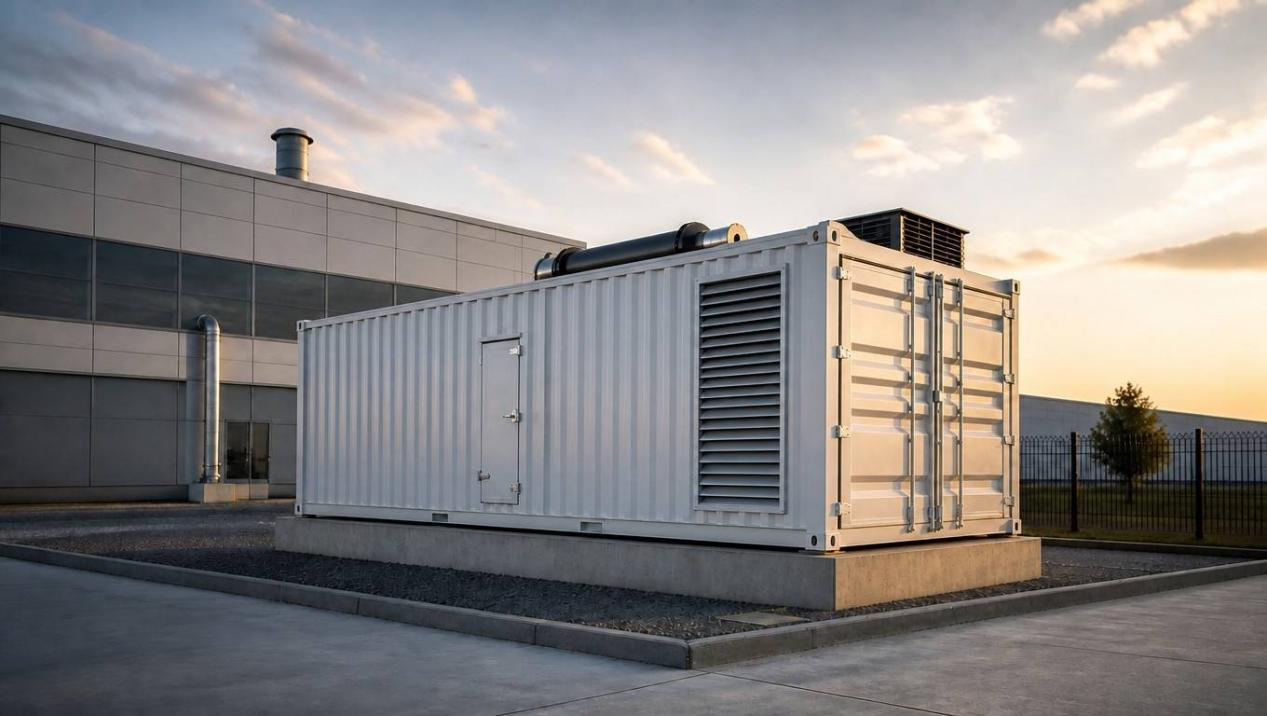
Containerized diesel generator set outside an industrial facility
Understanding Diesel Generator Fuel Consumption
Diesel generator fuel consumption is usually measured in liters per hour (L/h), gallons per hour (GPH), or grams per kilowatt-hour (g/kWh).
Among these measurements, g/kWh is commonly used by engine manufacturers because it reflects the fuel efficiency of the engine. For example, an engine with a fuel consumption rate of 200 g/kWh means it requires approximately 200 grams of diesel to produce 1 kilowatt-hour of electricity.
Modern diesel generator sets usually operate within a range of approximately 200–220 g/kWh at rated load, depending on the engine model and generator configuration.
The approximate fuel consumption of common generator sizes is:
|
Generator Capacity |
Approximate Fuel Consumption (75% Load) |
|
50kVA |
7–9 L/h |
|
100kVA |
13–16 L/h |
|
200kVA |
25–32 L/h |
|
500kVA |
60–75 L/h |
|
1000kVA |
120–150 L/h |
|
2000kVA |
240–300 L/h |
These figures are for reference only. Actual consumption may vary depending on engine specifications, load conditions, altitude, temperature, and maintenance level.
Generator Load Has a Major Impact on Fuel Consumption
One of the most important factors affecting fuel consumption is the actual operating load.
A diesel generator does not consume fuel at the same rate under different load conditions. For example, a 500kVA generator operating at 30% load will consume significantly less fuel than operating at full load.
However, lower load does not always mean better efficiency. Diesel engines achieve their best fuel efficiency when operating within a suitable load range, usually around 70% to 85% of rated capacity.
If a generator is oversized and operates at very low load for long periods, fuel efficiency may decrease, and problems such as incomplete combustion and carbon buildup may occur.
On the other hand, selecting a generator that is too small can cause continuous overload operation, increasing fuel consumption, reducing reliability, and shortening engine life.
Therefore, proper generator sizing is one of the most effective ways to control fuel costs.
What Factors Affect Diesel Generator Fuel Consumption?
The engine technology is one of the biggest factors influencing fuel efficiency. Modern diesel engines use advanced technologies such as electronic fuel injection, turbocharging, and optimized combustion systems to achieve better performance and lower fuel consumption.
Different engine brands have their own advantages depending on the application. Cummins and Perkins engines are widely used in industrial and commercial projects, MTU engines are commonly selected for high-power and demanding applications, while Weichai and Yuchai engines provide reliable and cost-effective solutions for many international markets.
The operating environment also affects fuel consumption. Generators working at high altitude may consume more fuel due to reduced air density. High temperatures can affect cooling performance and engine output. Poor maintenance, such as blocked air filters or inefficient fuel systems, can also increase fuel consumption over time.
For this reason, regular maintenance is essential to keep the generator operating close to its original efficiency.
Fuel Consumption Difference Between Standby and Prime Power Applications
The expected fuel consumption should always be evaluated according to the generator’s application.
For standby power applications, such as hospitals, data centers, and commercial buildings, generators usually operate only during power failures. In these cases, customers often focus more on reliability, fast starting, and stable power output rather than minimum fuel consumption.
For prime power applications, such as mining sites, industrial plants, remote communities, and rental power projects, generators may operate thousands of hours per year. In these situations, fuel efficiency becomes one of the most important factors because even small improvements can create significant savings over the equipment lifecycle.
For large continuous-power projects, customers should evaluate not only the generator price but also the long-term fuel cost.
How to Reduce Diesel Generator Fuel Costs
The most effective way to reduce fuel consumption is to select the correct generator size based on actual power requirements.
A properly sized generator can operate within an efficient load range and avoid unnecessary fuel waste. For large projects, multiple generators operating in parallel may also provide better efficiency because units can be started or stopped according to actual electricity demand.
Choosing a reliable engine brand, maintaining the generator regularly, and using high-quality fuel are also important factors in maintaining long-term efficiency.
Fuel consumption should be considered together with reliability, service availability, and total lifecycle cost. The lowest fuel consumption figure does not always mean the best solution if the generator cannot meet the project requirements.
Diesel generator fuel consumption depends on many factors, including generator capacity, engine technology, load level, operating conditions, and maintenance quality.
Choosing the right generator is not only about selecting the correct power output. It requires a complete understanding of operating conditions, fuel costs, and long-term performance.
With many years of export experience, Asia Generator provides customized diesel generator solutions from 5kW to 3000kW for customers worldwide. Our engineering team helps customers select reliable and efficient power solutions for standby power, prime power, industrial applications, and large-scale projects. Share your load profile and application details with our team at [email protected] for a fuel consumption estimate tailored to your project.
See Us at bauma CHINA 2026
24–27 November 2026 | Shanghai New International Expo Centre(SNIEC)
ASIA GENERATOR will be at Bauma CHINA 2026 this November. Come and see our generator set lineup in person and meet our team at the show.
Follow ASIA GENERATOR on LinkedIn for the latest Bauma CHINA updates, product news, project case studies, and live updates from the show floor.