EN
EN


Yaya za a zaɓi ƙarfi na saƙo na maimakon da ke ɗaya?
Zaɓin madaidaicin ƙarfin ƙarfin yana ɗaya daga cikin matakai mafi mahimmanci yayin siyan na'urorin janareto na dizal ko gas.
Babban janareta ba wai kawai yana kara farashin sayan ba amma kuma yana haifar da aiki na dogon lokaci a ƙananan kaya, rage yawan man fetur da kuma yiwuwar haifar da matsaloli irin su carbon da aka tara da kuma saurin motsi. A akasin wannan, ƙaramin janareta na iya kasa cika buƙatun farawa da aiki na kayan aiki a wurin, wanda ke haifar da rashin kwanciyar hankali na ƙarfin lantarki, yawan kashewa da yawa, lalacewar kayan aiki, ko ma dakatar da samarwa. Saboda haka, zabar madaidaicin saitin janareta yana buƙatar daidaita ƙarfin ƙarfin ƙarfin gaske, yanayin aiki, halayen kaya, da bukatun fadada nan gaba.
To, ta yaya za a iya sanin ƙarfin wutar lantarki da ta dace?
Mataki na 1: Fahimci bambanci tsakanin PRP da ESP
A cikin yadda za a zaɓi seti na gurka, yana da mahimmanci in sani wani bayani mafi kyawawan: ba shi da kuma standardi na gurka ta hanyar gurka.
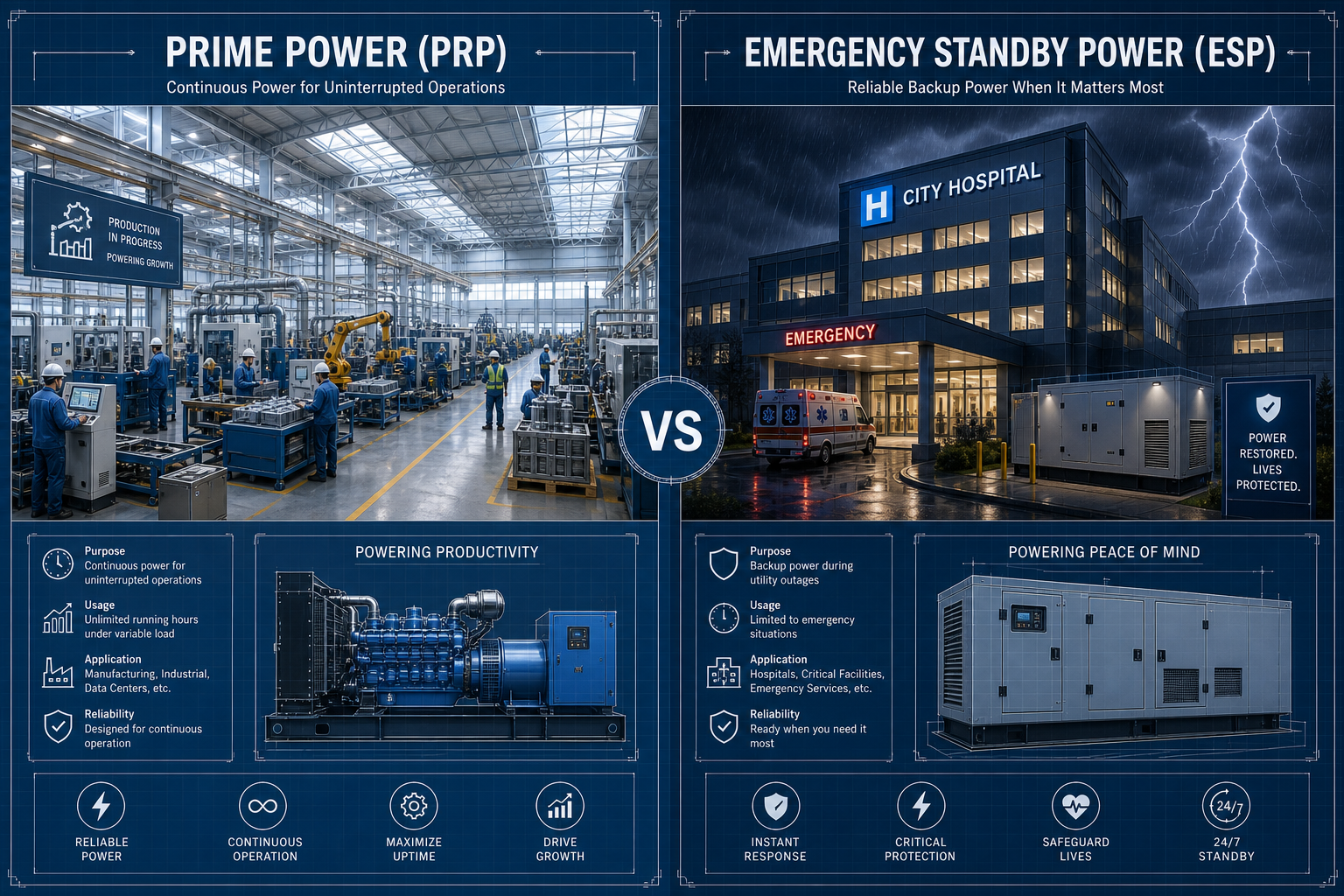
Wadannan biyu na gurka masu amfani sosai ne su ne Prime Power (PRP) da Emergency Standby Power (ESP).
Kuskuren wadannan biyu bayanai ne wani daga cikin dalilin muhimman su ne manyi su zaɓi gurka mai kyau ba.
1. Prime Power (PRP)
Prime Power yana nufin gurka ta hanyar gurka ta iya samun sa a lokaci ɗaya da kuma a lokacin da aka bayyana shi.
Shi ke da kyau ga wadanda abubuwa da suka yi a wani lokaci da aka bayyana—kamar yadda suke a cikin tushen fabrik, a cikin tushen kofin, a cikin tushen oil da gas, a cikin tushen kudin da ba su da kudin, a cikin data centers, da a cikin tushen kudin. Idan gurka ya kamata ya ci gaba da lokaci da yawa a rana ko ya kamata ya ci gaba da lokaci da yawa, ya kamata a zaɓi shi a cikin Prime Power (PRP) ta hanyar gurka.
2. Emergency Standby Power (ESP)
Emergency Standby Power ya zai fassara ƙarfi na yanzu wanda generator set zai iya bayyana shi ga lokacin kusan da farko a lokacin da kuma yanzu ta daga gida.
Ya zai amfani da shi ga yanzu na farko a lokacin da kuma yanzu ta daga gida, kuma ba za a iya amfani da shi ga yanzu na sauyi da kuma yanzu ta daga gida. Misalai sun haɗa da yanzu na kuma yanzu ta daga gida ga hospitals, hotels, commercial buildings, shopping centers, da residential complexes.
A matsayin kuskure: Za a zaɓi Prime Power (PRP) ga yanzu na sauyi da kuma yanzu ta daga gida; za a zaɓi Emergency Standby Power (ESP) ga yanzu na kuma yanzu ta daga gida a lokacin da kuma yanzu ta daga gida.
Ga generator set daya: Emergency Standby Power rating ya zai kasance ƙarfi da kuma yanzu ta daga gida da kuma yanzu ta daga gida na Prime Power rating.
Step 2: Ku ƙirƙirin yanzu na kuma yanzu ta daga gida
Bayan da yanzu na kuma yanzu ta daga gida ta daga gida ta daga gida, yanzu na kuma yanzu ta daga gida na kuma yanzu ta daga gida zai kasance yanzu na kuma yanzu ta daga gida.
Koƙarin kwayoyin da ake amfani da su yana ƙara bayanin lokacin amfani, nisba ta kwayoyin da suka shiga aiki da yawa, yadda yake amfani da su, da kuma kwayoyin da za su daga cikin kwayoyin da za su zama aiki. Wadanda suka yi amfani da motorai na elektriki, kamar pumpu na ruwa, compressorai na hawayi, da liftu, suna iya haɗawa da kwayoyin da suka fi kwayoyin da suka saba da yawa. Don haka, lokacin za a zaɓi generator set, ba za a yi amfani da kwayoyin da suka saba kawai ba; amma kuma za a yi amfani da kwayoyin da suka shiga aiki, kwayoyin da suka ƙara a lokacin shiga aiki, da kuma kwayoyin da suka ƙara a lokacin da suka shiga aiki.
Don wadanda suka yi amfani da kwayoyin da suka fi kwayoyin da suka saba da yawa, ana so mu baa lista ta kwayoyin da suka saba da yawa don mu yi amfani da teknisi na musamman don yi amfani da kwayoyin da suka saba da yawa da kuma fahimci kwayoyin da suka saba da yawa. Wannan yana taimaka wajen kare wadanda suka fi kwayoyin da suka saba da yawa.
Tsarin 3: Kammala kuma gaba daya na amfani da kwambo don zama mai yawa
A cikin sauyin kwambo, mahaullata suka fiye wa kwambo da ke "ta hanyar da ake bukatar" don samun kwarin da aka saba.
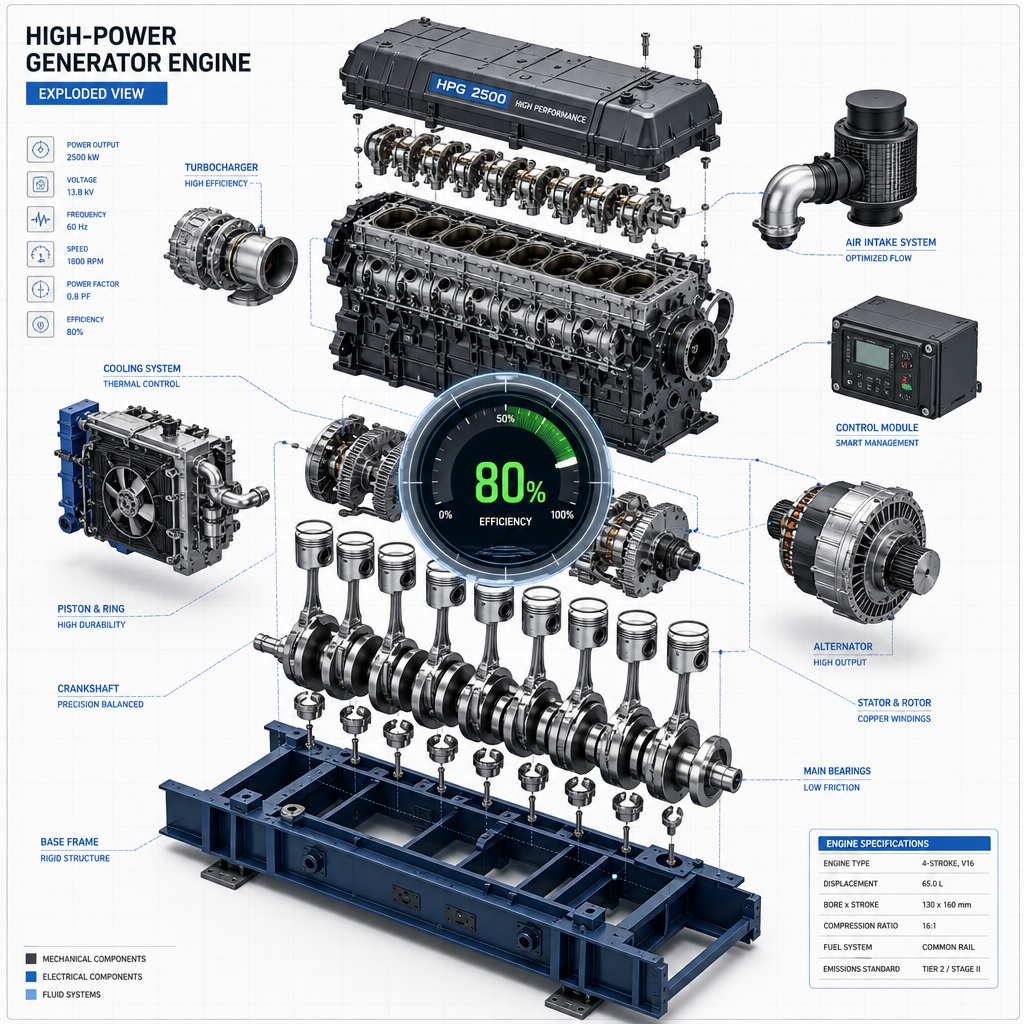
Amma a cikin amfani, ba za a iya amfani da kwambo a 100% kwarin da aka saba da kusan lokaci. A matsayin umummiya, kwarin da ke 70% zuwa 80% ke nufin tsari na amfani da ke kyau. Amfani da wannan tsari ya ba mu damar amfani da kwayoyin da ke kyau, amfani da kwayoyin da ke daga cikin tsari, kuma yana taimaka wajen rarraba kwayoyin da ke cikin kwambo, kuma yana taimaka wajen samun kwayoyin da ke cikin kwambo. Don haka, bayan samun kwarin da ke cikin kwambo, an yi amfani da kwayoyin da ke 10% zuwa 20% don samun kwayoyin da ke cikin kwambo, don kare kwarin da ke cikin kwambo, don taimaka wajen samun kwayoyin da ke cikin kwambo, kuma don zama mai yawa.
Tsarin 4: Za a sauya kwambo da ke cikin tsari na amfani.
Za a iya zuba ƙarfin da ke cikin kuma da shi ne, amma kuma da yadda ake amfani da shi. A cikin al’adu na sayarwa—kamar fabrikat, gurin, da kuma fildin na yanki—yana da tsawon lokaci na amfani, ƙarfin da ke cikin kuma da shi ne, da bukatun samun ƙarfin da ke cikin kuma da shi ne ta hanyar tashin kafin lokacin da ke cikin kuma da shi ne; don hakan, ana so a amfani da maitoba na ƙarfin da ke cikin kuma da shi ne (PRP), wanda ya kara baya cewa ƙarfin da ke cikin kuma da shi ne zai kashe kafin lokacin da ke cikin kuma da shi ne. Sistemin da suka saita ƙarfin da ke cikin kuma da shi ne don walhadi, hotil, da kuma bangun da suka saita ƙarfin da ke cikin kuma da shi ne suna amfani da grid a lokacin da suka saita ƙarfin da ke cikin kuma da shi ne amma suna bukatar fitowa daidai da kariya mai kyau a lokacin da aka ci gaba; ana so a amfani da maitoba na ƙarfin da ke cikin kuma da shi ne na kafin lokacin da aka ci gaba (ESP), wanda ya haɗa da Switch na kafin lokacin da aka ci gaba (ATS), sistemin da ke fitowa daidai, da kuma sistemin da ke cikin kuma da shi ne mai kyau. A cikin kwayoyin sayarwa, al’adu na yanki, da kuma al’adu na gida, yana da al’adu mai yawa, bukatun samun abubuwan da za su iya rufe, da kuma yana da al’adu mai yawa na ƙarfin da ke cikin kuma da shi ne.
A cikin yadda aka bayyana shi ne kuma wani abu ne da ke bukata: tsawo, karami, haɗari, ma'ajin amfani (ma'ajin IP), kuma kadanin gishiri da ruwa, kuma kadanin yadda zai iya aiki a yankin da ke ƙananan ko ƙananan harajin. Alama na generator da yawa yana zama mafi yawa a matsayin yadda zai iya aiki da kuma yana nufin ruwa mai yawa.
Za a zaɓa generator mai kyau ta hanyar yin haɗari da abubuwan da ke bukata ba ta hanyar fuskanci da mafi yawa na karami ba; wani abu da ke muhimci shine za a zaɓa karamin da ke ƙarƙashin abubuwan da ke bukata.
Wato a cikin yadda zai iya aiki da alama na generator a cikin al'ummar, a cikin gida na al'ummar, a cikin yankin da ke farin kuma a cikin yadda zai iya aiki da alama na generator a lokacin da ke bukata, za a zaɓa karamin da ke muhimci don ya zama asali na aiki mai amfani, mai ƙarƙashin kuma mai yawa na lokacin da ke bukata.
Za a zaɓa generator ba ta hanyar zaɓar mafi yawa na karami, amma ta hanyar zaɓar da ke muhimci. Share your load list and application details with Asia Generator's engineering team at [email protected]don free load analysis da karamin da ke muhimci.