EN
EN


Generator Derating: How Altitude and Ambient Temperature Affect Generator Output
When selecting a diesel generator set, most buyers start with the required power, such as 100 kW, 500 kW, or 1,000 kW. However, the rated power shown in a generator specification is normally based on specific reference conditions. When a generator operates at high altitude or in a high-temperature environment, its available output may be lower than the rated value. This reduction is known as generator derating.
Understanding derating is particularly important for projects in mountainous areas, deserts, mining sites, remote locations, and other demanding environments. Selecting a generator based only on the nominal kW rating without considering actual site conditions can result in insufficient power and reduced operating reliability.
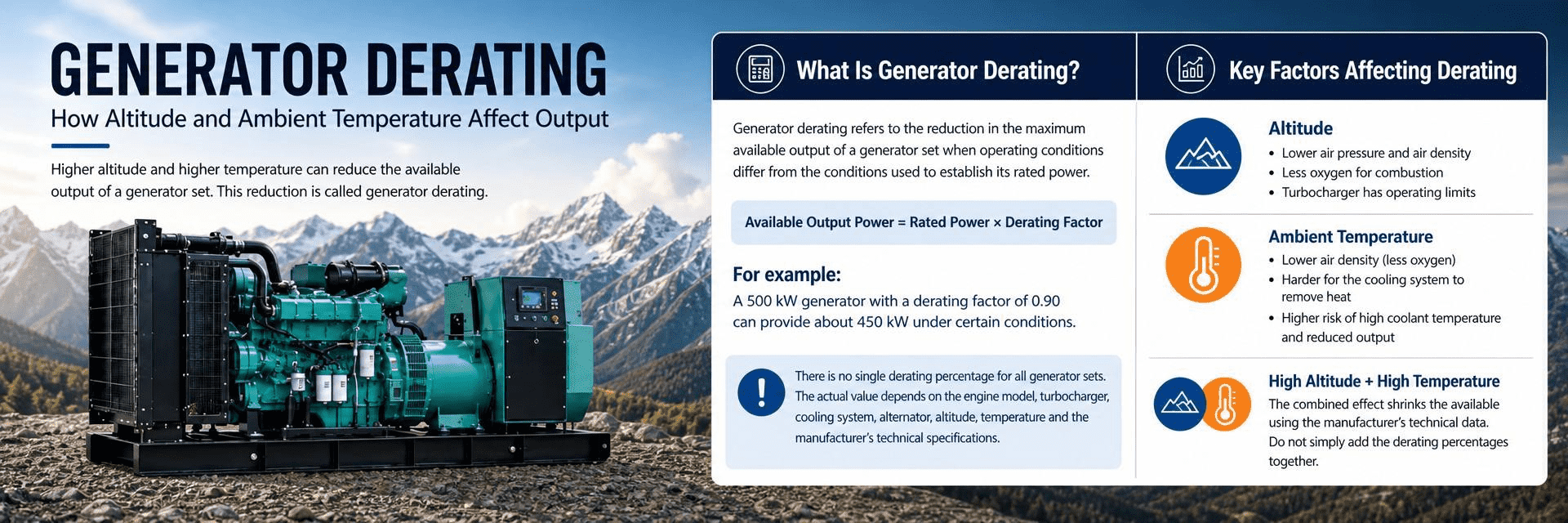
What Is Generator Derating?
Generator derating refers to the reduction in the maximum available output of a generator set when operating conditions differ from the conditions used to establish its rated power.
A simple way to express this is:
Available Output Power = Rated Power × Derating Factor
For example, if a 500 kW generator has a derating factor of 0.90 under a specific operating condition, its available output would be approximately 450 kW.
However, there is no single derating percentage that applies to all generator sets. The actual reduction depends on the engine model, turbocharger, cooling system, alternator, altitude, ambient temperature, and the manufacturer's technical specifications. Therefore, the correct derating value should always be obtained from the technical data of the specific engine and generator set.
How Altitude and Ambient Temperature Affect Generator Output
Altitude and ambient temperature are two of the most important environmental factors affecting generator performance.
As altitude increases, atmospheric pressure and air density decrease. A diesel engine therefore receives less oxygen during the intake process. Since diesel combustion requires sufficient oxygen, reduced air density can limit the amount of fuel that can be burned efficiently and consequently reduce engine output.
Turbocharging helps compensate for the lower air density at high altitude by forcing more air into the cylinders. However, the turbocharger also has operating limits. At a certain altitude, the engine may no longer be able to maintain its standard power output without exceeding allowable exhaust temperature or thermal limits. For this reason, a generator rated at 500 kW under standard conditions should not automatically be expected to deliver the same 500 kW at an altitude of 2,000 meters.
Ambient temperature has a similar effect. As air temperature rises, air density decreases, meaning less oxygen is available for combustion. High temperatures also make it more difficult for the cooling system to transfer heat from the engine coolant to the surrounding air.
This becomes particularly important in hot climates. A generator operating at 25°C may have very different cooling and performance requirements from the same generator installed in an environment where temperatures can reach 45°C or 50°C.
At 50°C ambient temperature, for example, the cooling system must work significantly harder to maintain the engine within its normal operating temperature range. If the radiator, ventilation system, or airflow design is inadequate, the generator may experience high coolant temperature, increased thermal stress, reduced output, or even protective shutdown.
The challenge becomes greater when high altitude and high ambient temperature occur at the same time. For example, a project requiring 500 kW of prime power at 2,000 meters altitude and 50°C ambient temperature cannot be evaluated simply by looking at the generator's standard 500 kW rating. The engine manufacturer's performance data must be checked to determine the actual available power under these conditions.
It is also important not to simply add altitude and temperature derating percentages together unless the manufacturer's calculation method specifically allows it. The combined effect should be evaluated using the technical data provided for the specific engine model.
How to Select a Generator for High-Altitude and High-Temperature Applications
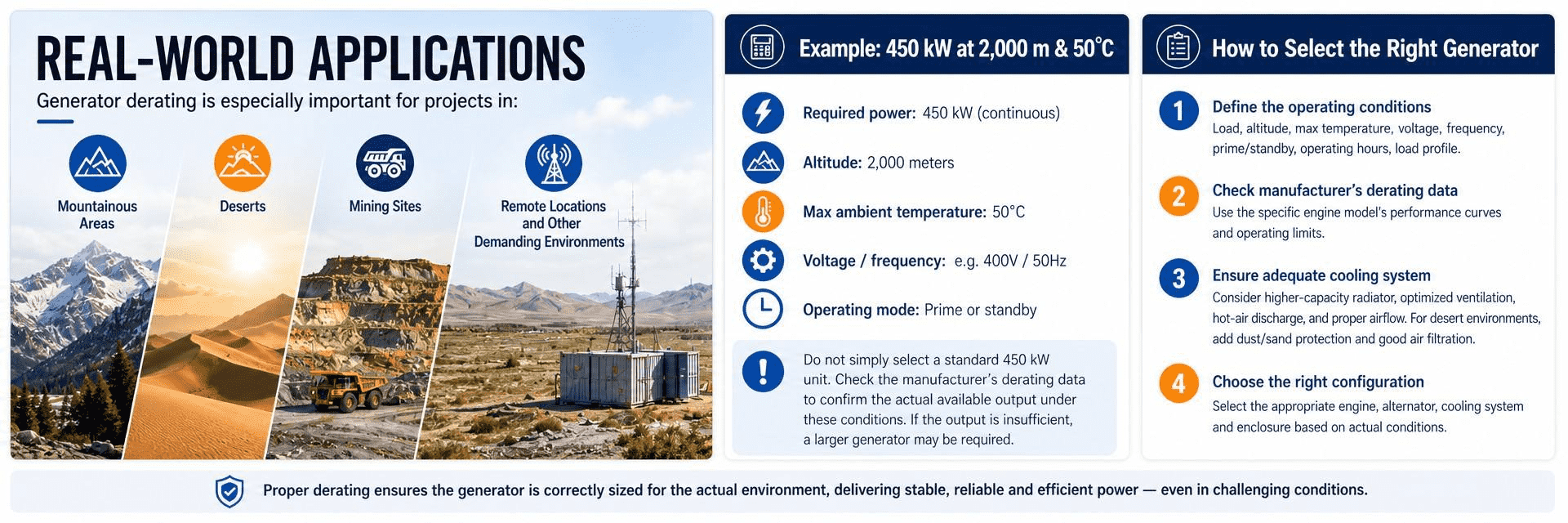
Before selecting a generator, the actual operating conditions should be clearly defined. In addition to the required electrical load, buyers should provide the installation altitude, maximum ambient temperature, required voltage and frequency, prime or standby rating, expected operating hours, and load profile.
For example, consider a project requiring 450 kW of continuous power at 2,000 meters and 50°C. It would not be appropriate to select a standard 450 kW generator simply because the nominal rating matches the load. Engineers should first check the manufacturer's derating data and determine whether the generator can actually provide 450 kW continuously under these conditions.
If the available output is insufficient, a larger generator may be required. The additional capacity compensates for the environmental derating and ensures that sufficient usable power remains available at the site.
The cooling system is another important consideration. Depending on the application, high-temperature projects may require a higher-capacity radiator, optimized ventilation, improved hot-air discharge, and appropriate airflow through the generator enclosure. For desert environments, dust and sand protection and suitable air filtration are also important because restricted airflow can further reduce cooling performance.
Different engine models can have significantly different performance at high altitude and high temperature. Therefore, engine selection should be based not only on rated power, but also on the manufacturer's derating curves and operating limits.
Why Proper Derating Matters
Ignoring generator derating can lead to an undersized generator that operates continuously at or close to its maximum allowable output. This may result in poor load response, higher exhaust temperatures, increased thermal stress, higher fuel consumption, reduced service life, and unexpected shutdowns under heavy loads.
Proper derating analysis ensures that the generator is correctly sized for the actual environment rather than just its standard test conditions.
For projects in high-altitude regions, deserts, mining areas, and other extreme environments, generator sizing should always consider altitude, maximum ambient temperature, cooling conditions, and the actual load profile.
A reliable generator solution begins with understanding the site conditions. By using the engine manufacturer's technical data and selecting the appropriate engine, alternator, cooling system, and generator configuration, it is possible to maintain stable and reliable power even under challenging operating conditions.
If you are planning a generator project, providing the required power, altitude, maximum ambient temperature, voltage, frequency, and operating mode during the quotation stage allows the manufacturer to evaluate the appropriate generator configuration and derating requirements.
Follow ASIA GENERATOR on LinkedIn for more generator selection guides, technical insights, project case studies, and product updates. Stay connected for practical information on reliable power solutions for different operating environments.